Innovative Technologies for Sustainable Critical Raw Materials Recovery
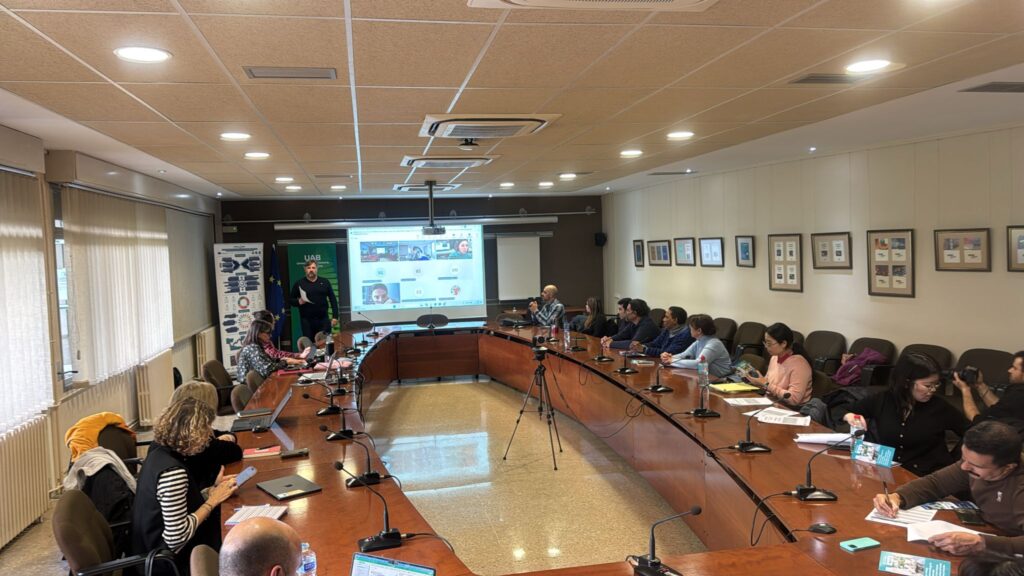
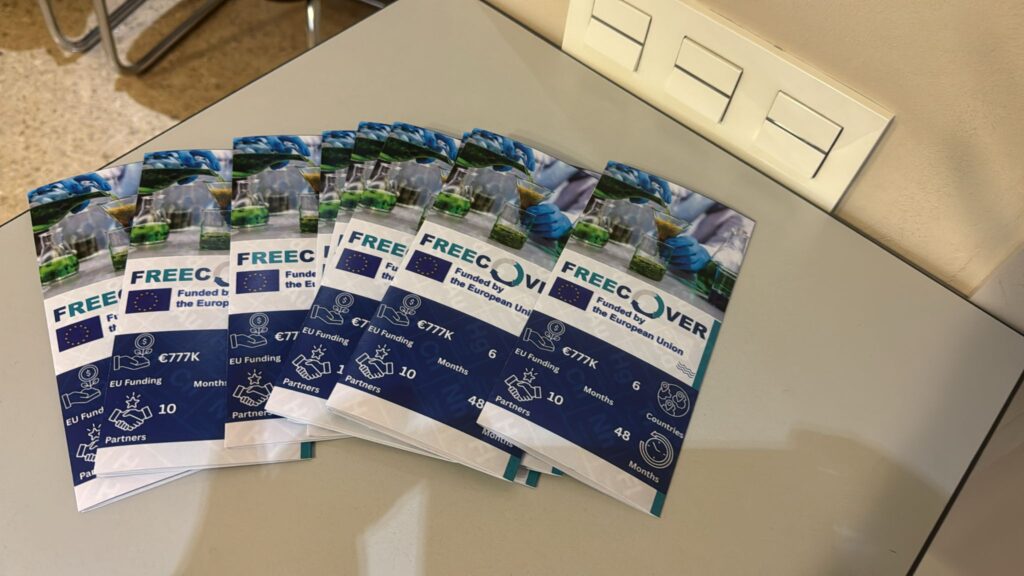
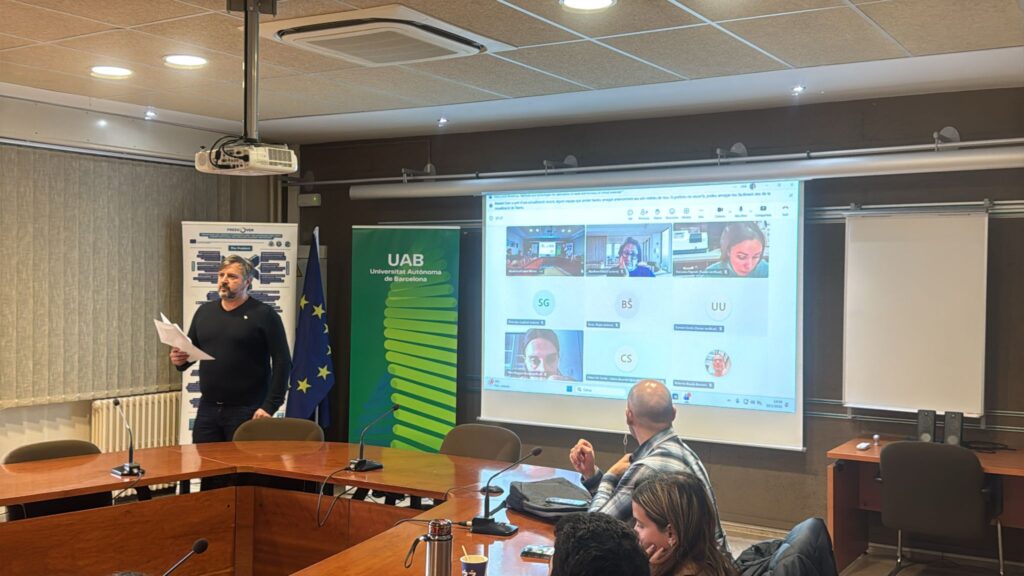
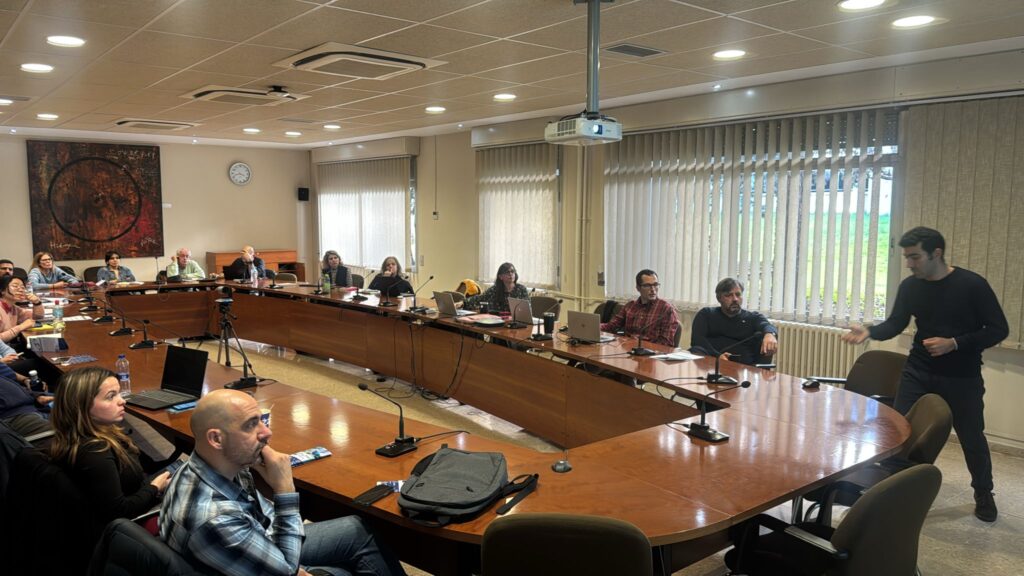
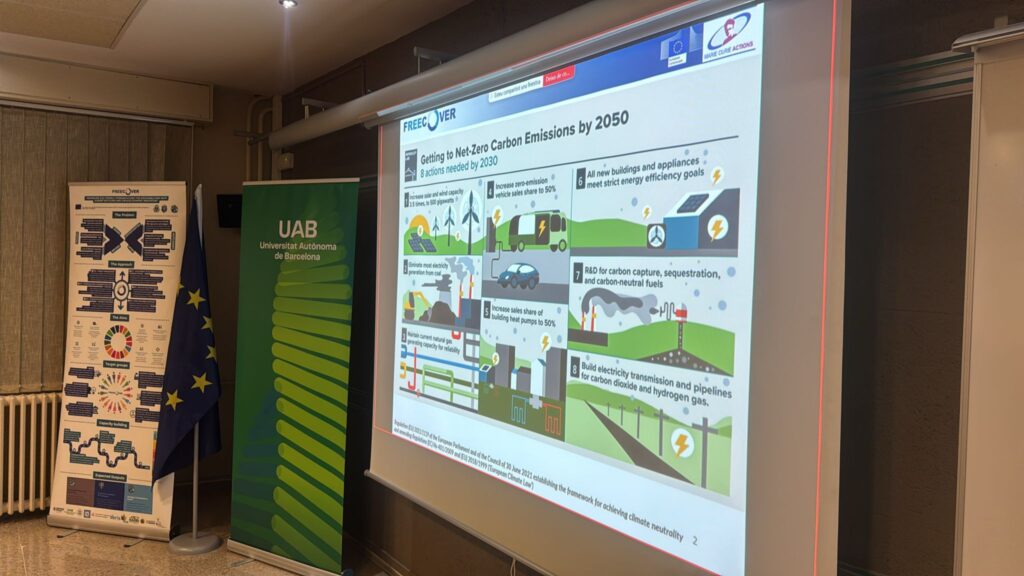
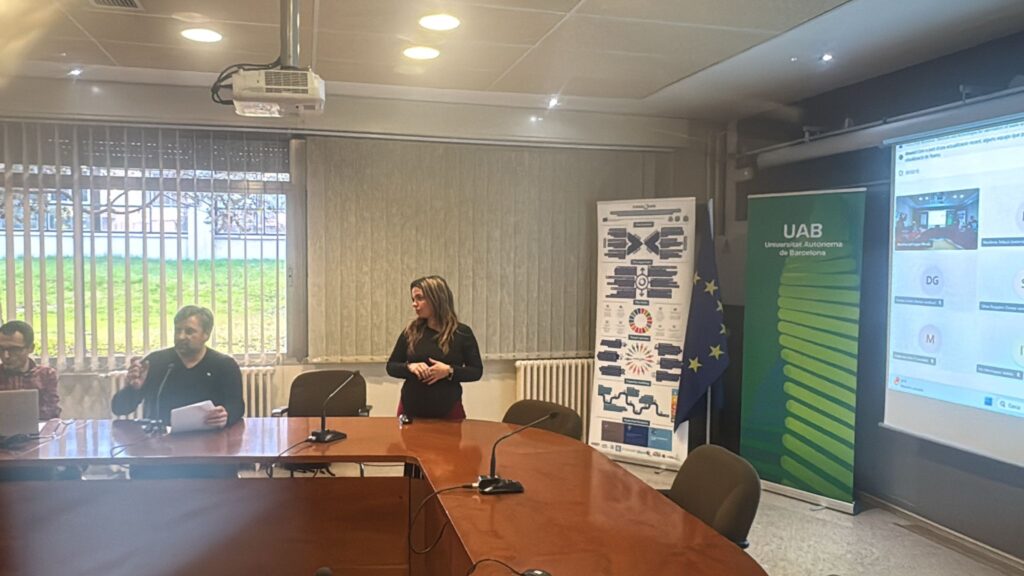
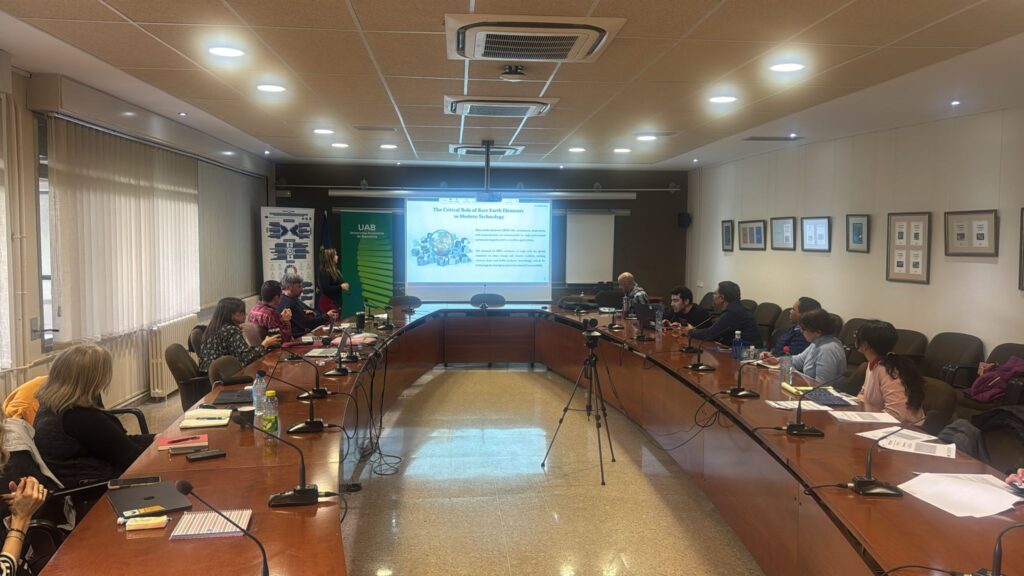
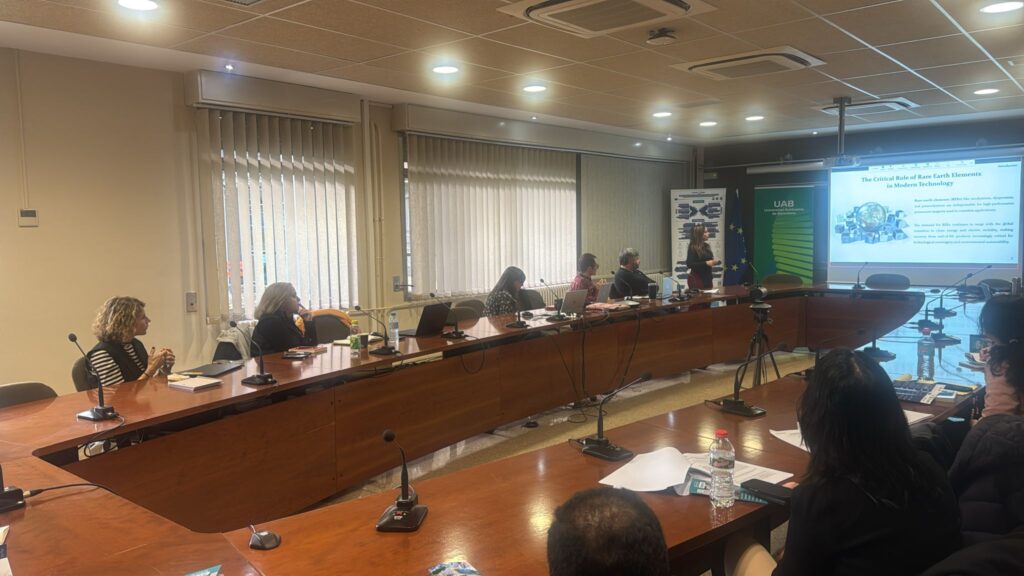
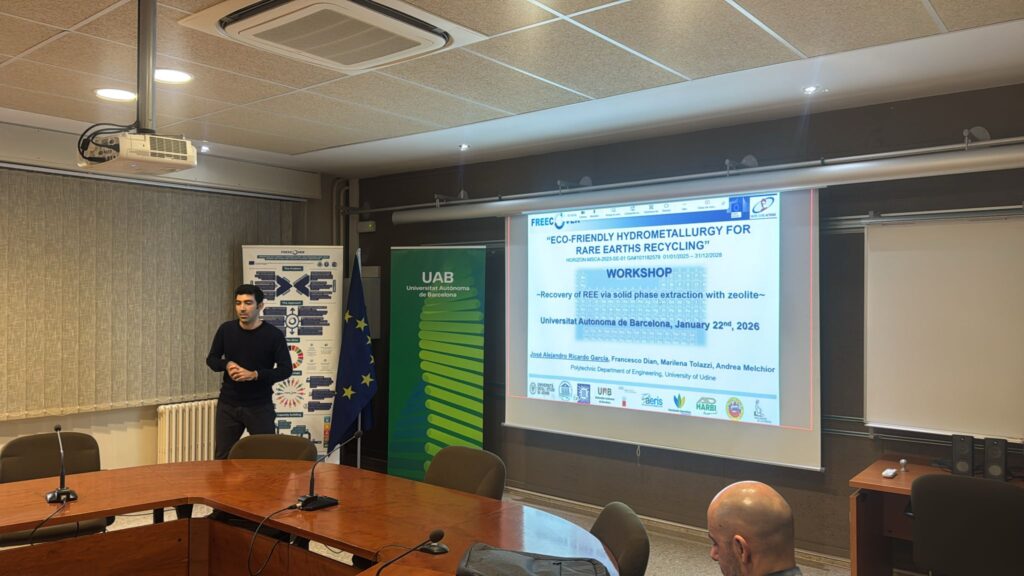
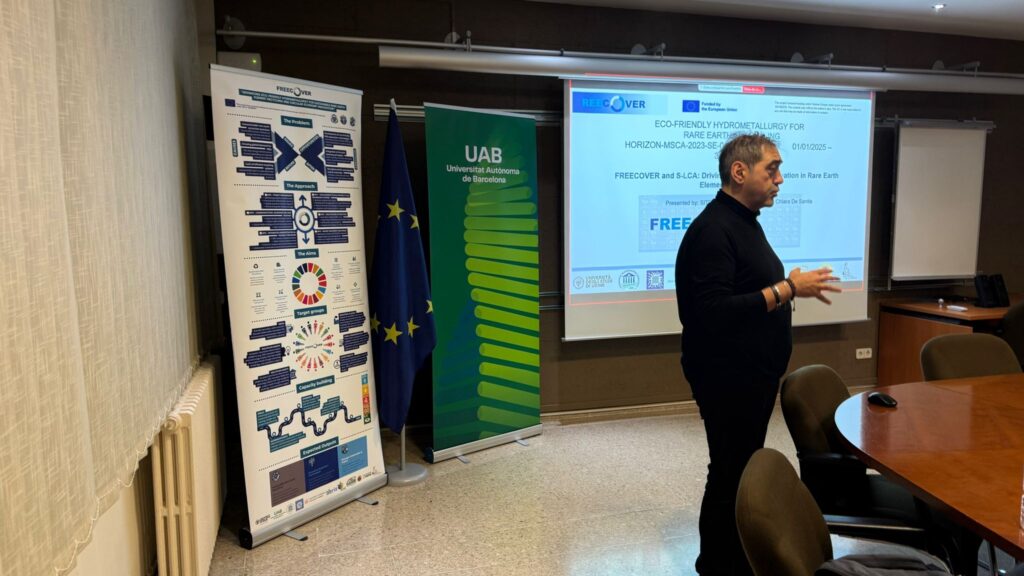
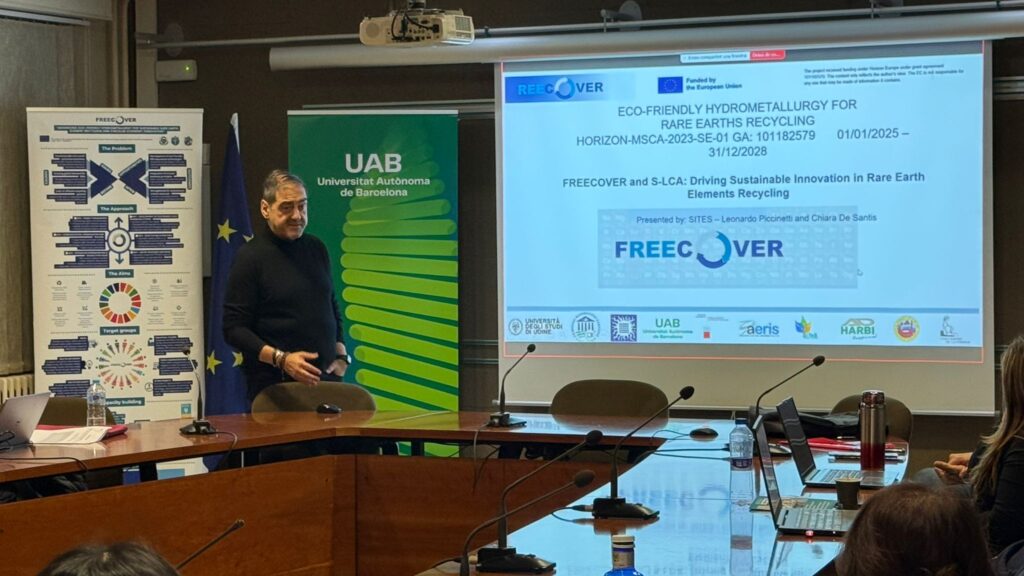
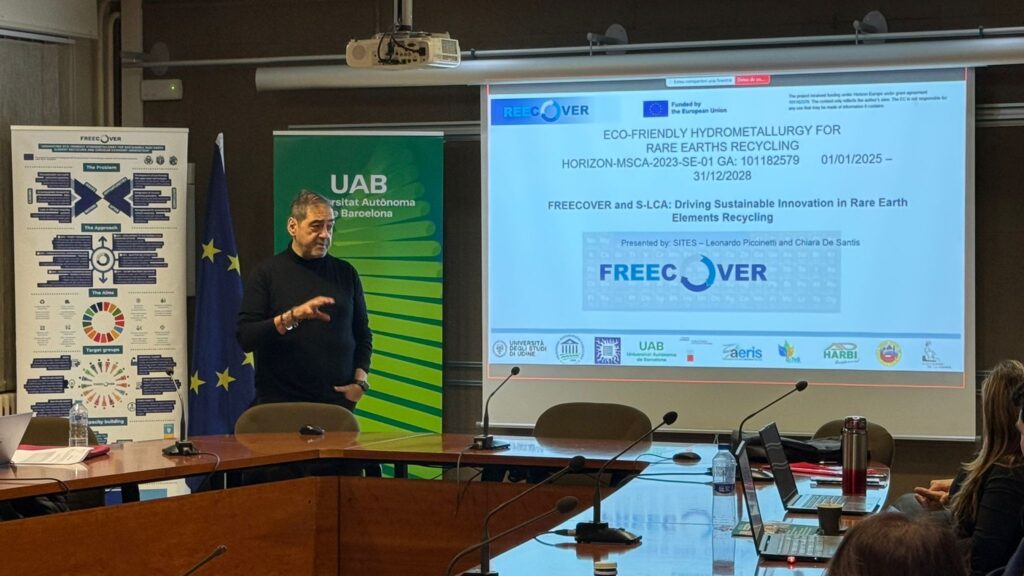
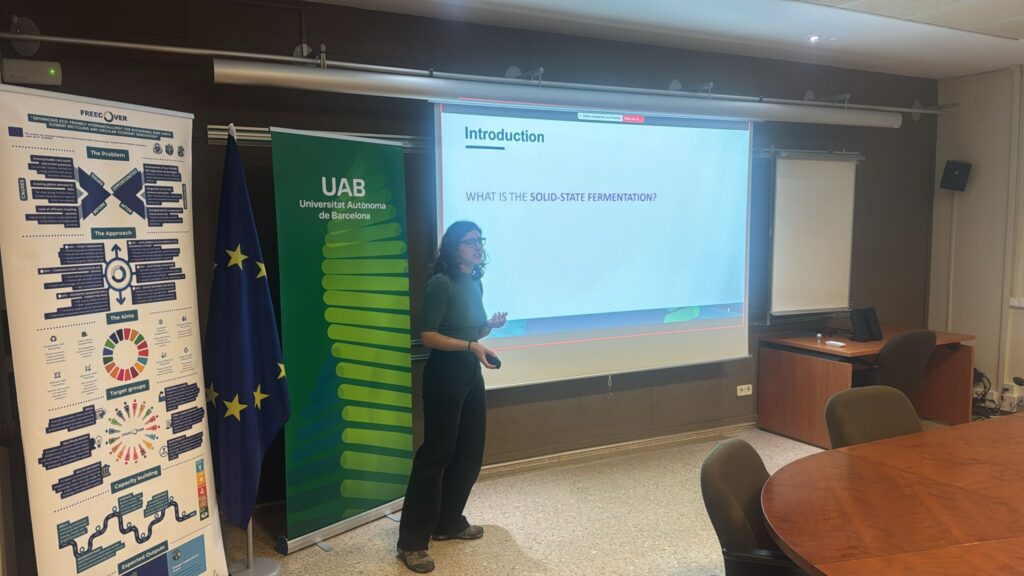
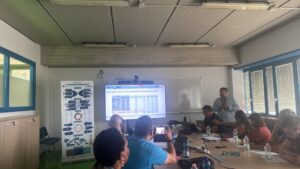
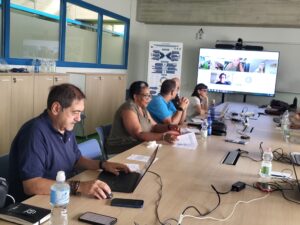
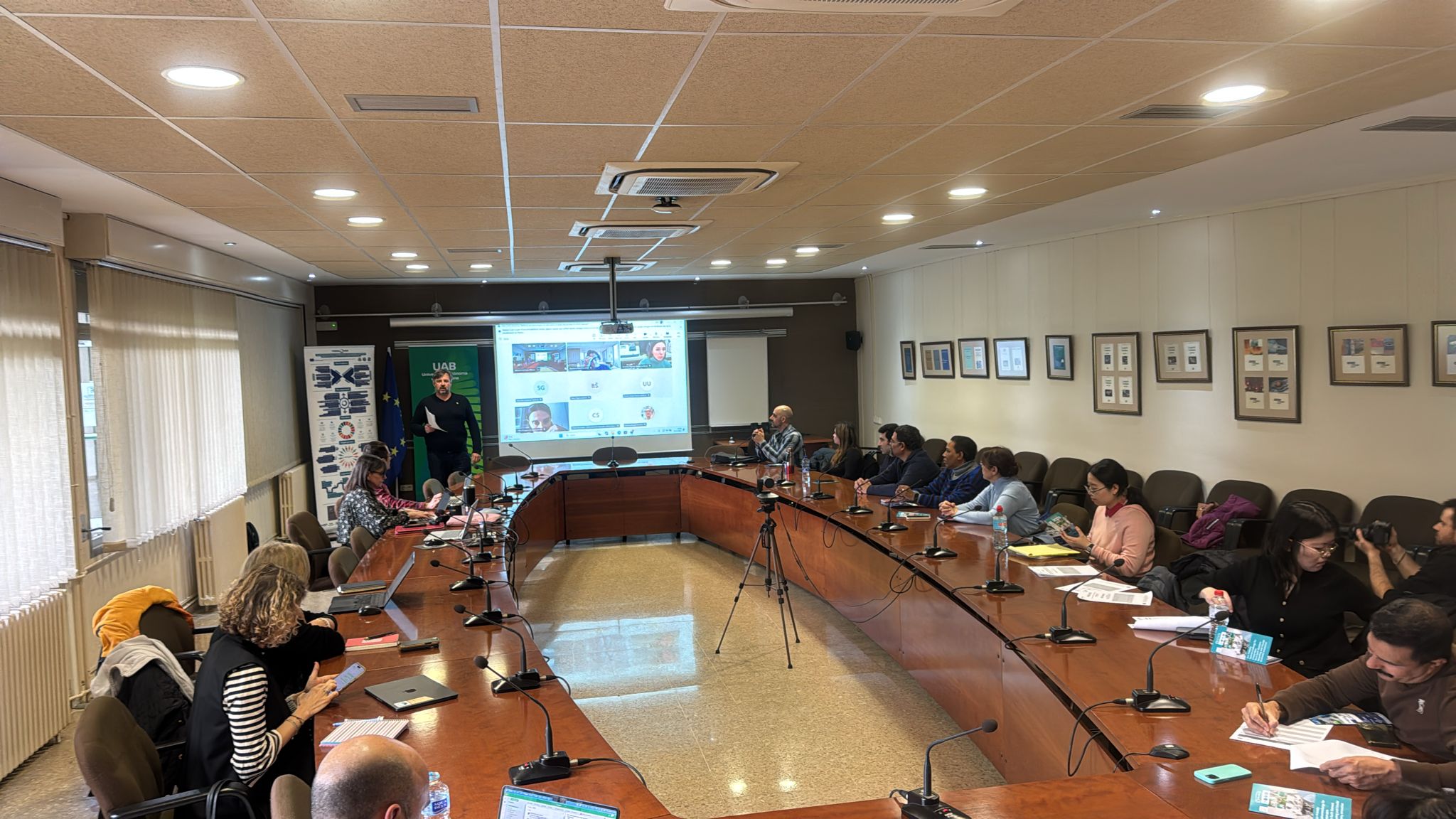
The FREECOVER consortium gathered on 22 January 2026 at the Universitat Autònoma de Barcelona (UAB) for a full-day technical workshop dedicated to advancing sustainable methods and technologies for the valorisation of waste and recovery of critical raw materials, with a strong focus on Rare Earth Elements (REEs).
Organised within the framework of the Horizon Europe Marie Skłodowska-Curie Staff Exchanges (MSCA-SE) programme, the workshop brought together researchers and innovation partners from across Europe and beyond to exchange knowledge, present results, and strengthen scientific collaboration. The event highlighted FREECOVER’s interdisciplinary approach, combining green chemistry, hydrometallurgy, biotechnology, and circular economy strategies to reduce Europe’s dependency on primary raw materials while minimizing environmental impact.
Opening the Dialogue on Sustainable Materials
The workshop opened with a shared objective: to explore how eco-friendly technologies can transform industrial and electronic waste into valuable resources. Throughout the day, partners presented cutting-edge research and practical solutions addressing different stages of the recycling and recovery chain — from materials design to extraction, separation, and sustainability assessment.
Scientific Sessions and Contributions
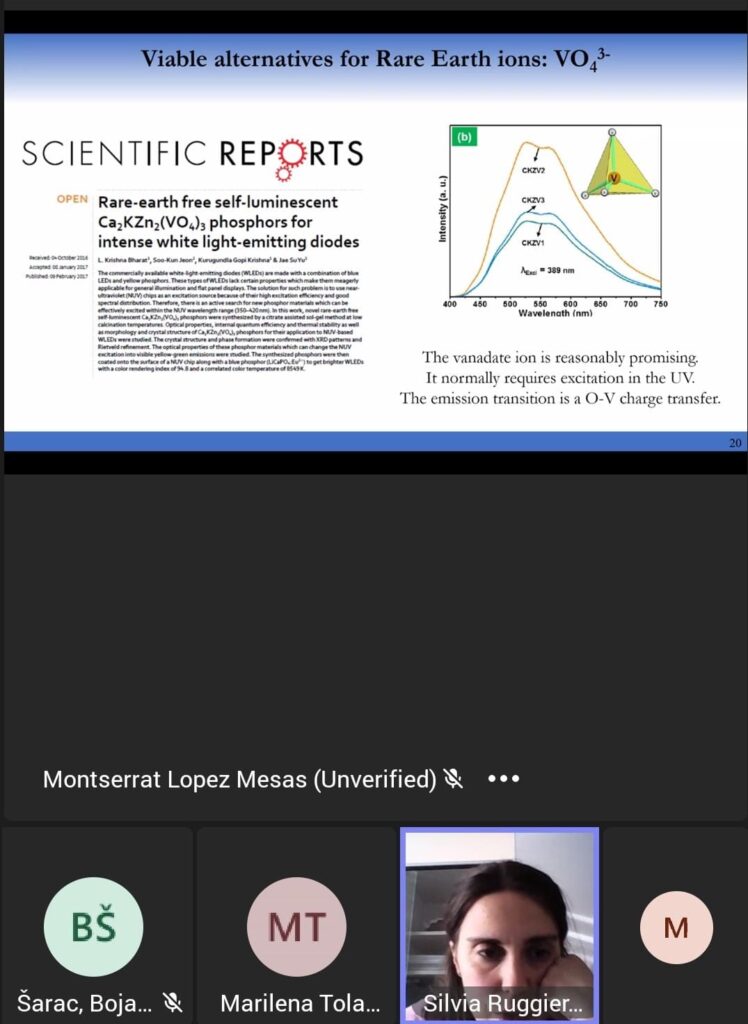
Luminescent Rare Earth Materials – University of Verona (UNIVR)
S. Ruggieri and F. Piccinelli presented research on phosphors and luminescent materials based on rare earth ions, demonstrating how advanced functional materials can enable high-performance technological applications while encouraging more efficient and responsible use of critical elements. Their work highlights the importance of sustainable design from the very beginning of the materials lifecycle.
Selective Ionic Liquids for Green Separation – University of Novi Sad (UNSPMF)
S. Gadžurić introduced innovative ionic liquid systems designed for selective and environmentally friendly metal separation. These next-generation solvents provide safer alternatives to traditional extraction chemicals, reducing toxicity and energy consumption while improving selectivity for target elements.
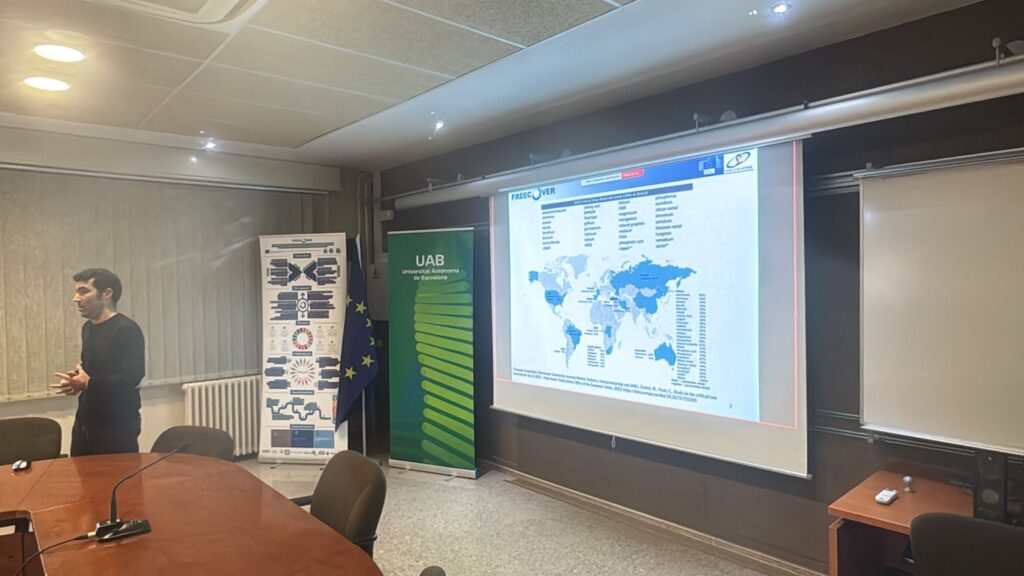
Natural Zeolites for Solid-Phase Extraction – University of Udine (UNIUD)
José Alejandro Ricardo García showcased the use of natural zeolites as low-cost and sustainable adsorbents for solid-phase extraction. This nature-inspired approach supports greener recovery processes by leveraging abundant, naturally occurring materials to capture valuable metals.
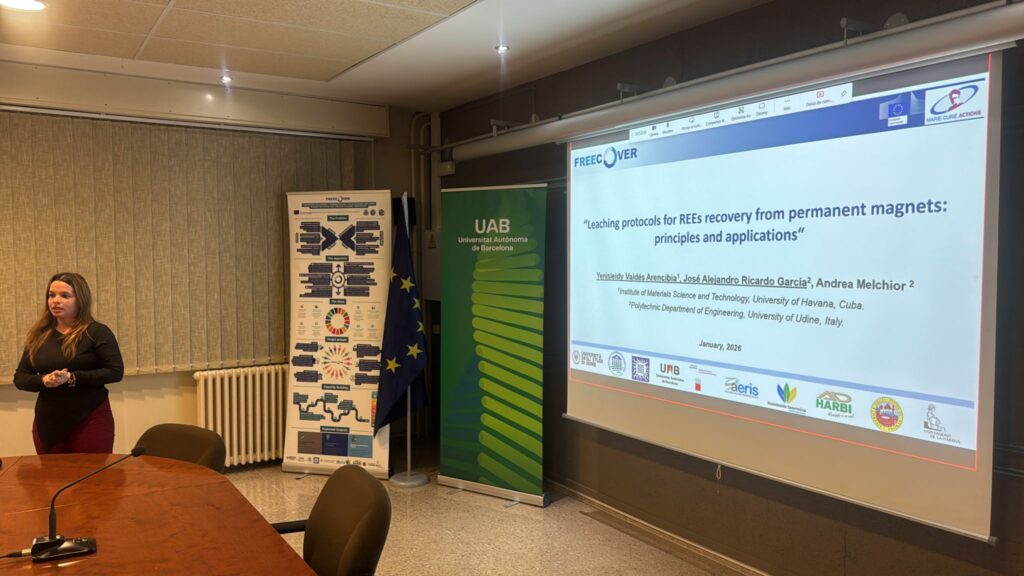
Recovery of Rare Earths from Spent Magnets – University of La Habana (UH)
Y. Valdés Arencibia presented strategies for leaching and recovering rare earth elements from end-of-life permanent magnets, addressing one of the most critical challenges in electronic waste recycling. The work contributes directly to closing material loops for clean energy technologies such as electric vehicles and wind turbines.
Thermal Desorption for Mining and Industrial Residues – UAB & LEITAT (with Chilean partners)
R. Boada and collaborators discussed thermal desorption technologies for recovering metals from mining residues and industrial waste streams. Their research demonstrates how waste streams can be transformed into secondary raw material sources, aligning strongly with circular economy principles.
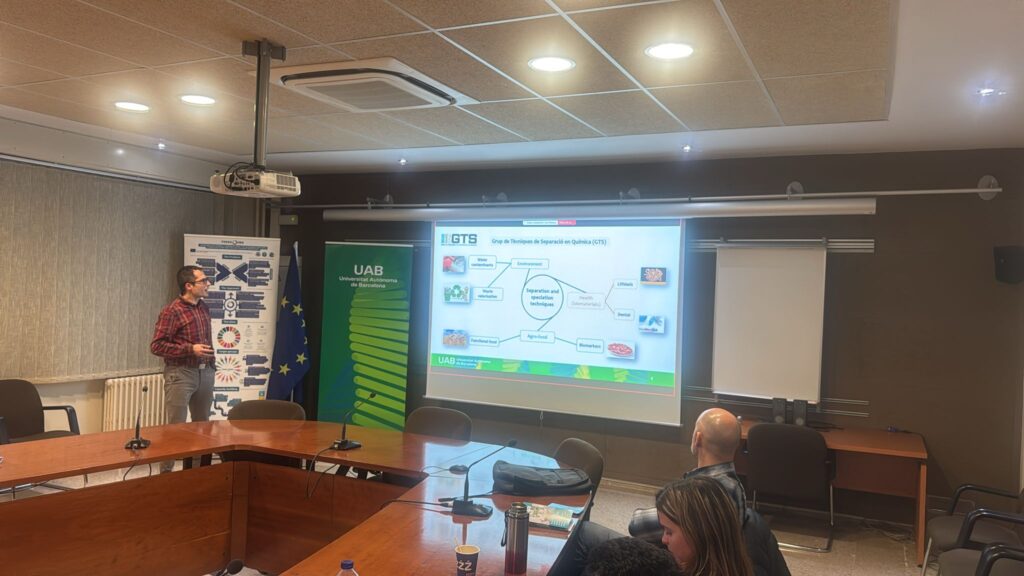
Biotechnology for Circular Economy Solutions – UAB & AERIS
J. Font y Pomarol explored the role of biotechnology and sustainable processing routes in waste valorisation. By integrating biological systems into recovery processes, the team aims to reduce chemical usage and environmental impacts while enhancing resource efficiency.
Sustainability and Innovation Strategy – SITES
Closing the technical sessions, Dr. Leonardo Piccinetti from Sustainable Innovation Technology Services (SITES) presented FREECOVER’s sustainability assessment and innovation strategy, including environmental performance evaluation and life-cycle considerations. His talk emphasized that technological advances must be accompanied by measurable environmental and societal benefits to ensure real impact.
Strengthening Collaboration Across Borders
Beyond the scientific content, the workshop reinforced FREECOVER’s mission to promote international and inter-sectoral cooperation through the MSCA Staff Exchanges programme. By bringing together academic institutions, research centres, and innovation stakeholders, the event facilitated valuable discussions, knowledge transfer, and new ideas for future collaboration.
Participants engaged actively throughout the day, sharing experiences from secondments and discussing how research results can be translated into practical, scalable solutions for industry and society.
Science Café: Connecting Research with Society
The day concluded with an informal Science Café open to the public, where Prof. Andrea Melchior (University of Udine) led a discussion titled:
“The Hidden Metals of the Green Transition—Can We Recycle Them Better?”
The session bridged the gap between research and society, allowing students, citizens, and researchers to explore the importance of Rare Earth recycling in a relaxed and interactive environment.
Looking Ahead
The FREECOVER workshop at UAB demonstrated the consortium’s strong progress toward developing sustainable hydrometallurgical processes and green recovery technologies. From innovative solvents and natural adsorbents to biotechnology and sustainability assessment, the project continues to deliver solutions that support Europe’s circular economy, resource resilience, and environmental goals.
As FREECOVER moves forward, similar training, dissemination, and public engagement activities will continue to play a central role in maximizing impact and sharing results with the broader community.