
January 16, 2025 – The FREECOVER project officially launched with a hybrid Kick-off Meeting hosted by the Università degli Studi di Udine, marking a pivotal step toward sustainable Rare Earth Element (REE) recovery in Europe. This ambitious Horizon Europe initiative brings together leading universities, research institutions, and industry partners to develop eco-friendly solutions critical for the EU’s green transition.
Attendees from Italy, Serbia, Spain, Slovenia, Ireland, Bosnia and Herzegovina, and Cuba collaborated to define the project’s roadmap, communication strategy, and early-stage research priorities. Key discussions included:
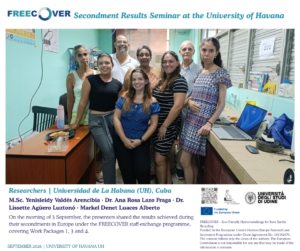
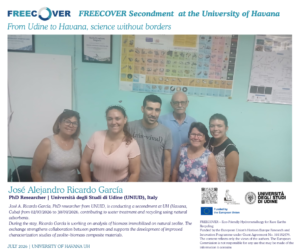
- Cross-border knowledge exchange through researcher secondments.
- Mapping existing REE recovery technologies for innovation gaps.
- The launch of the Science Café initiative, bridging science and public engagement.
As a key dissemination partner, SITES will ensure FREECOVER’s findings reach policymakers, industries, and the public, driving real-world impact. With a focus on sustainability and resource efficiency, FREECOVER is set to transform REE recovery for a cleaner future.