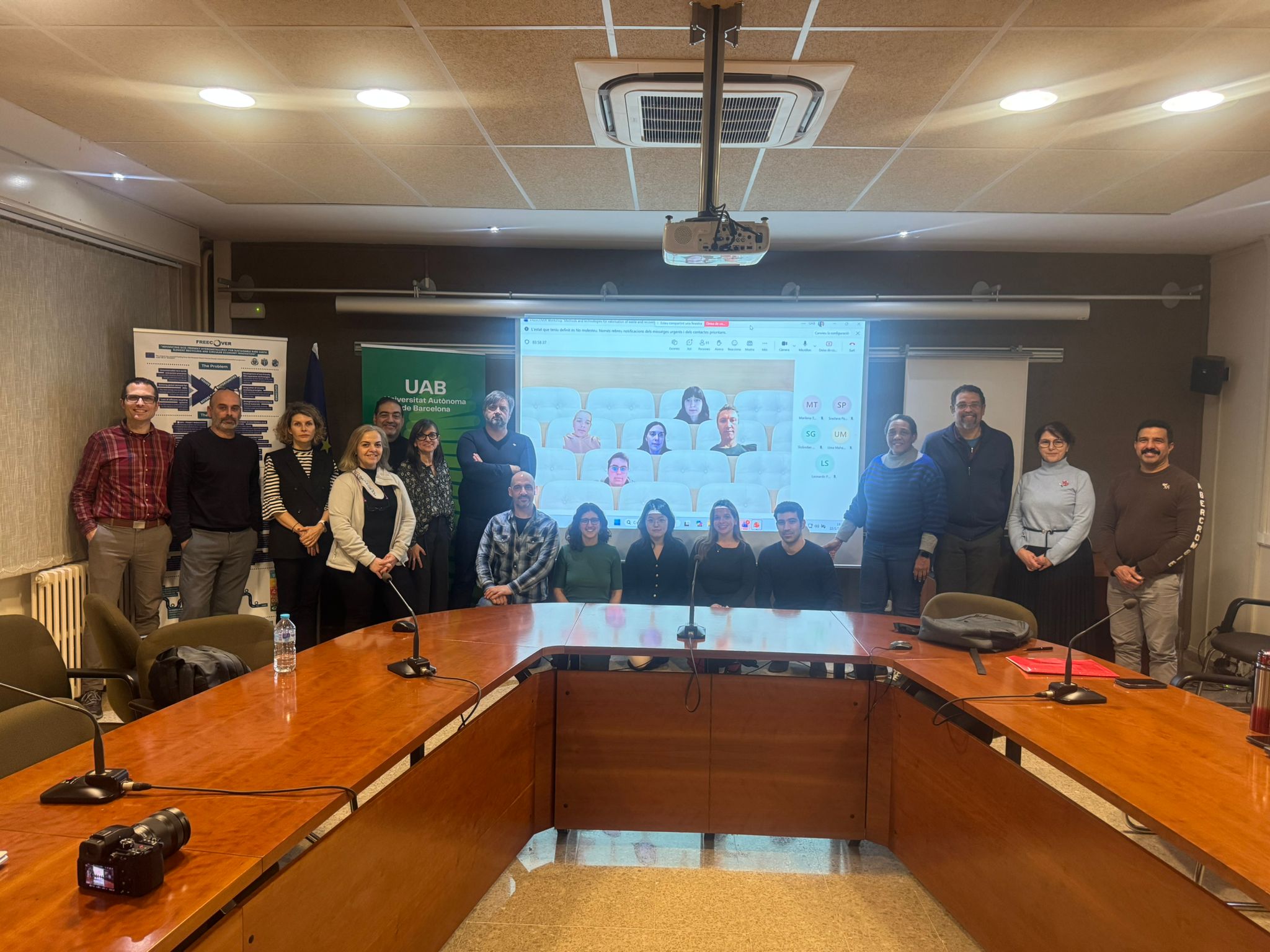
FREECOVER Hosts International Workshop and Public Science Café at UAB to Advance Sustainable Recovery of Rare Earth Elements
Barcelona, Spain – 22 January 2026
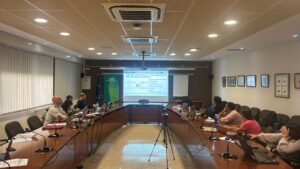
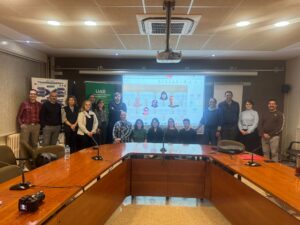
The FREECOVER project, funded by the European Union’s Horizon Europe programme under the Marie Skłodowska-Curie Actions (MSCA) Staff Exchanges, successfully organised a full-day technical workshop and public Science Café at the Universitat Autònoma de Barcelona (UAB), bringing together researchers, industry partners, and citizens to discuss innovative solutions for the sustainable recovery of Rare Earth Elements (REEs) and other critical raw materials.
The workshop, titled “Methods and Technologies for Valorisation of Waste and Recovery of Critical Materials,” gathered experts from leading institutions across Europe and Latin America to present recent advances in green hydrometallurgy, selective ionic liquids, natural adsorbents, thermal recovery technologies, and biotechnology-based approaches. The event facilitated knowledge exchange and collaboration within the FREECOVER consortium and supported the project’s objective of developing environmentally friendly alternatives to conventional, energy-intensive extraction methods.
Speakers included researchers from the University of Verona (UNIVR), University of Novi Sad (UNSPMF), University of Udine (UNIUD), University of La Habana (UH), Universitat Autònoma de Barcelona (UAB), LEITAT, AERIS, and Sustainable Innovation Technology Services (SITES). Presentations addressed innovative materials design, selective separation processes, recycling of end-of-life magnets, recovery from mining and industrial residues, and sustainability assessment strategies. Together, these contributions highlighted the interdisciplinary nature of FREECOVER’s approach and the importance of combining chemistry, engineering, and circular economy principles to strengthen Europe’s resource resilience.
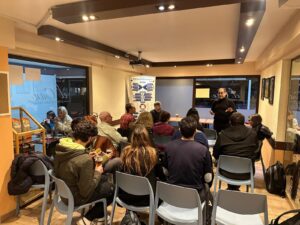
In the evening, FREECOVER extended the discussion beyond the scientific community by hosting a Science Café titled “The Hidden Metals of the Green Transition—Can We Recycle Them Better?” Led by Prof. Andrea Melchior (University of Udine), the informal event welcomed students, researchers, and members of the public. Participants explored the societal importance of critical raw materials, the challenges of recycling rare earths, and the role of sustainable technologies in supporting Europe’s green and digital transitions. The interactive format encouraged open dialogue and strengthened connections between research and society.
These activities reflect the core objectives of the MSCA Staff Exchanges programme, which promotes international and inter-sectoral collaboration, training, and public engagement to maximise the societal impact of European research. By combining technical workshops with outreach initiatives, FREECOVER ensures that scientific progress is accompanied by knowledge sharing and community involvement.
FREECOVER continues to advance sustainable hydrometallurgical processes for the recycling of rare earth elements from metallic waste, contributing to circular economy strategies and reducing dependency on primary raw material extraction. Further training, dissemination, and engagement activities are planned throughout the project’s duration.
About FREECOVER
FREECOVER – Eco-Friendly Hydrometallurgy for Rare Earths Recycling – is a Horizon Europe Marie Skłodowska-Curie Staff Exchanges project (Grant Agreement No. 101182579). The project develops sustainable technologies for the recovery and recycling of rare earth elements using eco-friendly materials such as bio-derived ionic liquids and natural adsorbents. Through international staff exchanges and collaboration between academic and non-academic partners, FREECOVER aims to strengthen Europe’s capacity for critical raw materials recovery while minimising environmental impact.
Media & Contact
FREECOVER Communication Team (SITES)
Website: https://freecover.eu
EU Funding Acknowledgement
This project has received funding from the European Union’s Horizon Europe research and innovation programme under the Marie Skłodowska-Curie Actions Staff Exchanges grant agreement No. 101182579.