FREECOVER Perspective from the BATRAW Event on Building Europe’s Battery Circularity Ecosystem
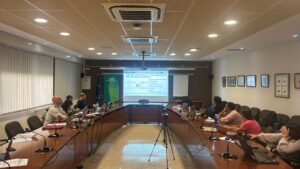
The transition toward electric mobility and renewable energy is accelerating worldwide, bringing new opportunities and challenges related to battery sustainability. On 4 March 2026, the BATRAW event “From Regulation to Practice: Building an EU Industrial Ecosystem for Battery Circularity” took place in Madrid, bringing together researchers, policymakers, and industry representatives to discuss the future of battery recycling and circularity in Europe.
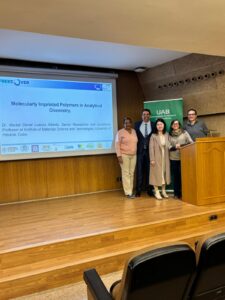
The event was attended by Shariefah Darries from SITES (Sustainable Innovation Technology Services), a partner in the FREECOVER project, who shared insights from the discussions and technological developments presented during the event.
A Rapidly Growing Battery Ecosystem
The event opened with a presentation from Bastien Carlos Hualpa De Schuyter (LEITAT), highlighting the rapidly growing demand for electric vehicles and energy storage systems. With 17 million electric vehicles sold globally last year, the battery ecosystem is expanding at an unprecedented pace.
Experts emphasized that this rapid growth raises a crucial question:
How will Europe manage the massive volumes of batteries reaching their end-of-life in the coming years?
According to projections shared during the event, battery waste streams will increase significantly as electric mobility expands, requiring robust recycling infrastructure and clear regulatory frameworks.
The Economic Challenge of Battery Recycling
Researchers from CEPS – Centre for European Policy Studies presented new insights into the economic barriers facing battery recycling in Europe. Current recycling costs can significantly exceed the recoverable value of materials, particularly for lithium iron phosphate (LFP) batteries, which are becoming increasingly dominant in the global market.
While traditional pyrometallurgical recycling processes recover valuable metals such as nickel and cobalt, they often fail to recover lithium effectively. In contrast, hydrometallurgical recycling technologies allow higher recovery rates but require large processing volumes to become economically viable.
Presentations highlighted that many recycling facilities in Europe currently operate at less than 10% of their available capacity, demonstrating the gap between technological capability and economic scalability.
BATRAW Demonstrates Technological Solutions
The BATRAW project presented its technological developments aimed at addressing these challenges. Pilot facilities demonstrated impressive recovery capabilities, including black mass recovery rates between 92% and 98%, as well as automated battery dismantling technologies capable of handling a large portion of battery disassembly tasks.
These innovations illustrate that many of the required technological solutions already exist. However, scaling them across Europe will require coordinated policy implementation and industrial investment.
Second Life Applications for Batteries
Another important topic discussed during the event was the concept of battery second life. Experts from BeePlanet Factory explained that many batteries entering repurposing markets have never actually been used in vehicles. Instead, they often come from overproduction or supply chain mismatches and remain in excellent condition.
Repurposed batteries are already being deployed in a wide range of applications, including industrial energy storage, fast-charging support systems, and grid stabilization projects.
Policy Developments in the European Union
The event also explored the policy framework shaping battery circularity in Europe. Speakers discussed the impact of the EU Battery Regulation, the Critical Raw Materials Act, and new industrial policy initiatives designed to strengthen Europe’s strategic autonomy in critical materials.
While these policies represent significant progress, industry representatives highlighted the need for faster implementation and clearer regulatory guidance. Standardisation issues, testing protocols, and cross-border waste transport regulations remain key challenges for the sector.
Connecting Research, Policy, and Innovation
The BATRAW event demonstrated the importance of collaboration between research projects, industry stakeholders, and policymakers in building a sustainable battery ecosystem.
For the FREECOVER project, which focuses on sustainable recovery and recycling of critical raw materials, these discussions highlight the growing relevance of innovative recycling technologies and circular economy strategies in Europe’s green transition.
The event reinforced a key message:
The technology exists, but scaling circular battery solutions requires coordinated policy, investment, and international collaboration.
🎥 Event video:
https://www.youtube.com/live/yO0GwkFsswc
🔗 Event information:
https://www.ceps.eu/ceps-events/from-regulation-to-practice-building-an-eu-industrial-ecosystem-for-battery-circularity/