A greener hydrometallurgical route to recover rare earths from end-of-life magnets reaches two audiences: the public in Verona and researchers in Japan
Rare earth elements (REEs) are not as rare as their name suggests. Cerium ranks around 25th among the most common elements in the Earth’s crust, and even the scarcest, thulium and lutetium, sit around 70th. The real problem is geography: deposits and processing capacity are concentrated in very few countries. This is why the European Commission ranks REEs among the most strategically important Critical Raw Materials for Europe’s green and digital transition.
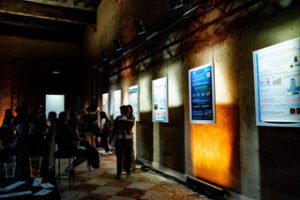
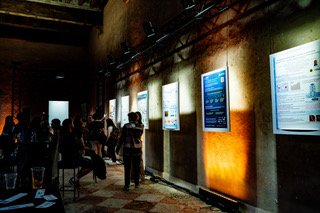
FREECOVER responds to this challenge by turning end-of-life permanent magnets into a secondary source of rare earths. At European Researchers’ Night in Verona), the University of Verona presented the project’s approach to the public in a poster entitled «Eco-Friendly Hydrometallurgy for Rare Earth Recycling». The poster was led by Prof. Fabio Piccinelli on behalf of the consortium.
The team could not be there in person. At the same time, they were in Kyoto, Japan, presenting FREECOVER’s results at the ICL 2026 conference. Their message to visitors in Verona was simple: the poster speaks for itself.
A three-step, low-impact process
The FREECOVER process targets NdFeB and SmCo magnet waste. It is designed to replace harsh industrial reagents with gentler, more sustainable alternatives:
1. Dissolving the magnets and removing iron – Spent magnets are dissolved in acetic and citric acids, both of which can be obtained from biomass. Iron is then removed by precipitation.
2. Extracting the rare earths – Neodymium, praseodymium, dysprosium and samarium are separated using eco-friendly ionic liquids on a polymer support, forming Supported Ionic Liquid Membranes (SILMs). Natural minerals such as pyrophyllite and zeolites are added to make composite membranes.
3. Recovering transition metals and recycling water – Natural adsorbents capture the remaining cobalt, nickel and copper. The purified water is reused to dissolve new magnet waste, and the spent adsorbents can be regenerated and used again.
The result is a closed-loop concept that combines metal recovery with lower chemical and water use. It is a concrete contribution to the circular economy and to Europe’s strategic autonomy in critical raw materials.
A consortium built on mobility
The poster brings together authors from ten organisations across seven countries: the University of Verona and the University of Udine (Italy), the University of Novi Sad and the Vinča Institute of Nuclear Sciences, University of Belgrade (Serbia), the Autonomous University of Barcelona and AERIS Tecnologías Ambientales (Spain), the University of Ljubljana (Slovenia), Sustainable Innovation Technology Services – SITES (Ireland), AD Harbi (Bosnia and Herzegovina) and the University of Havana (Cuba).
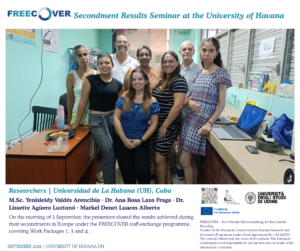
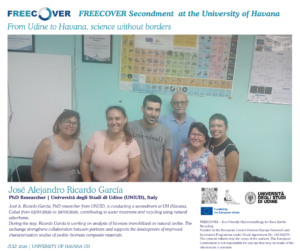
Research staff exchanges are at the heart of FREECOVER. Two University of Verona researchers are next in line: Emanuele De Rienzo will spend three months in Barcelona, and Silvia Ruggieri will travel to Ljubljana for a one-month stay starting in 2027. These secondments transfer know-how between chemistry, materials science and industrial partners. They also help build the next generation of researchers in sustainable metal recovery.
📄 Download the poster: FREECOVER at ICL 2026 (PDF)
FREECOVER has received funding from the European Union’s Horizon Europe research and innovation programme under the Marie Skłodowska-Curie grant agreement No. 101182579. Views and opinions expressed are those of the author(s) only and do not necessarily reflect those of the European Union or the European Research Executive Agency. Neither the European Union nor the granting authority can be held responsible for them.